Japantastics, Inc.
Sato Mokko: Solid Zelkova Masugumi Stand Table
Sato Mokko: Solid Zelkova Masugumi Stand Table
1 in stock
Couldn't load pickup availability
Solid Zelkova Masugumi Stand Table
Delivery: 7 months
Refund Policy: https://japantastics.jp/policies/refund-policy
All prices include international delivery, duties, and taxes, fully arranged on your behalf.
All orders are shipped internationally via Nippon Express, with delivery fully managed from Japan to your residence and tracked throughout.
The work will be personally installed by the artist, ensuring that it is assembled and presented exactly as intended.
A Vertical Expression of Japanese Architectural Tradition
Overview
This exceptional stand table transforms masugumi, the intricate bracket system traditionally used to support the sweeping eaves of Japanese temples and shrines, into a commanding work of contemporary functional art.
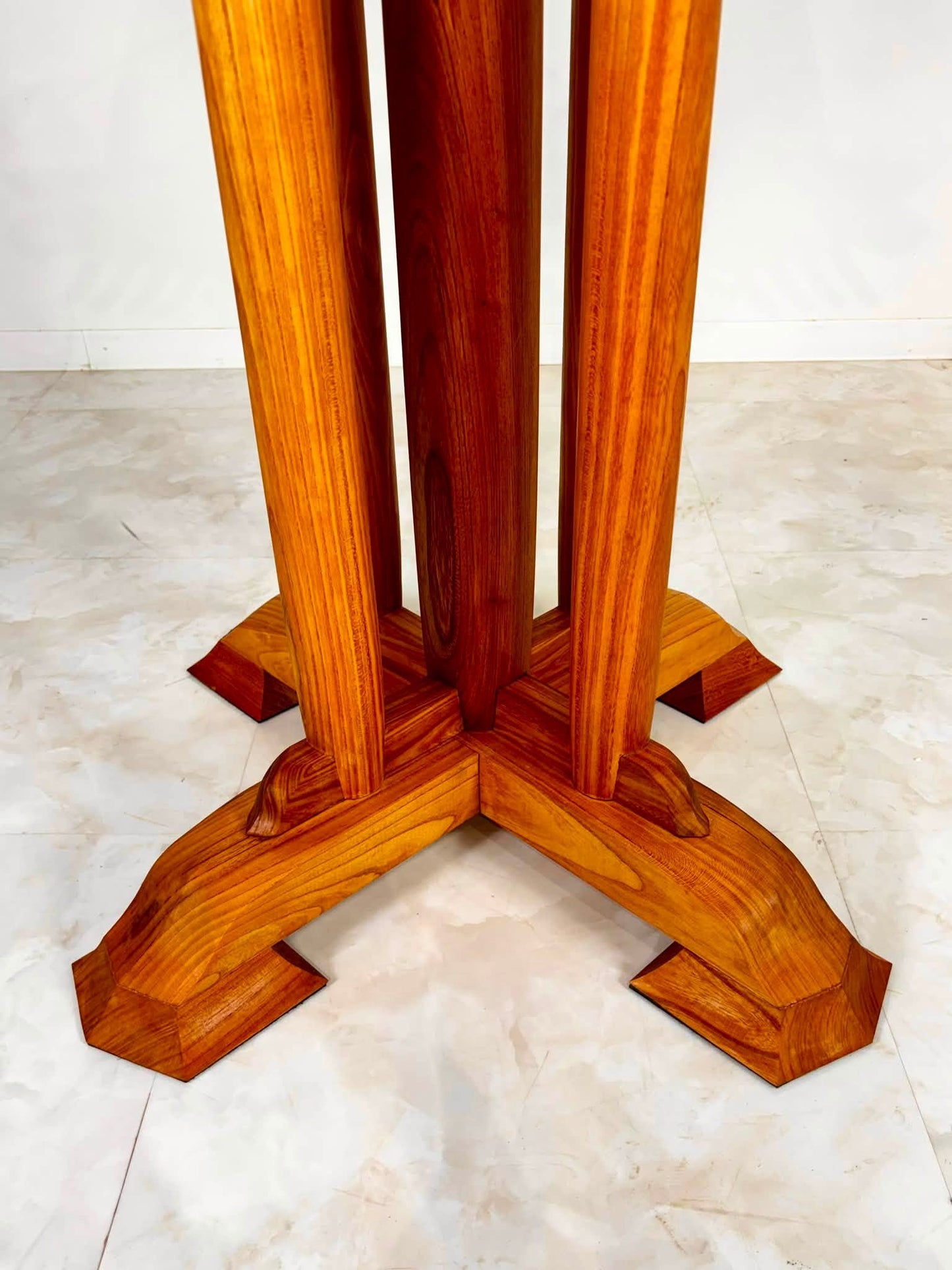
Constructed entirely from solid Japanese keyaki (zelkova), the table celebrates the structural intelligence and visual rhythm inherent in traditional Japanese timber architecture. Layer upon layer of precisely fitted wooden components rises beneath the tabletop, expanding outward to create a composition of remarkable complexity, balance, and sculptural presence.
Rather than treating masugumi merely as an ornamental reference, the work allows the architecture itself to become the subject. What once served as a structural system high above the viewer in sacred architecture is brought into the human scale, where its geometry, craftsmanship, and accumulated cultural memory can be experienced intimately from every direction.
Materiality & Construction
Solid Japanese Zelkova
Every wooden component, from the four projecting legs to the intricate bracket structure above, is crafted from carefully selected solid keyaki, one of Japan's most highly regarded hardwoods. Its pronounced grain and natural warmth lend the work a powerful material presence, while the character of the wood is intended to deepen and mature gracefully over time.
Masugumi — Architecture as Sculpture
At the center of the work is the elaborate masugumi structure. Individual zelkova elements are precisely assembled into successive layers, creating a rhythmic progression that expands outward as it rises.
The resulting form possesses both architectural strength and visual intricacy. Light enters the spaces between the interlocking members, producing continually changing patterns of shadow and revealing the extraordinary precision of the construction.
Transparency and Structure
A circular tempered-glass top provides a deliberately contemporary counterpoint to the solidity and warmth of the zelkova. More importantly, its transparency leaves the structure beneath fully visible.
Viewed from above, the tabletop becomes almost a lens through which the intricate geometry of the masugumi can be explored. The functional surface therefore does not conceal the craftsmanship supporting it; instead, it invites the viewer to look directly into the architectural heart of the work.
Tradition Reimagined
Standing 1,010 mm high, the work has a distinctly vertical character. Its elevated proportions transform the traditional bracket system into an almost tower-like sculptural composition, while the four projecting legs establish a strong sense of stability and symmetry.
The dialogue between zelkova and glass, mass and transparency, tradition and contemporary form allows the table to inhabit a wide variety of interiors without losing its distinctly Japanese identity. It may function as a stand table for a lounge or reception setting, as a focal point within a private study, or even as an exhibition pedestal in its own right.
Neither simply furniture nor an architectural reproduction, the Solid Zelkova Masugumi Stand Table occupies the territory between design, craftsmanship, and sculpture. By translating a structural language developed over centuries of Japanese sacred architecture into an object for contemporary life, the work allows tradition not merely to be preserved, but to assume a new purpose and presence.
Main Body
Dimensions: H 1,010 × W 800 × D 800 mm
Material: Solid Japanese Keyaki (Zelkova)
Weight:
Top: Circular Tempered Glass
Structure: Traditional Masugumi Bracket Construction
Base: Four-Way Projecting Cross-Leg Structure
Artist’s Profile
Master Artisan of Contemporary Japanese Furniture
Third-Generation Head of Sato Mokko
Born into the distinguished Sato Mokko workshop—founded in 1934 in Tsuru City, Yamanashi Prefecture—Keiichiro Sato is the third-generation heir to a lineage long revered for exceptional craftsmanship. Once known locally by the saying, “For bridal furnishings, go to Sato Mokko,” the atelier built its reputation through refined heirloom furniture and traditional architectural woodwork.
From an early age, Sato absorbed the discipline of master craftsmanship under the guidance of his grandfather, Zenjuro. He inherited techniques rooted in shrine and temple architecture, including intricate kumiko latticework, complex structural joinery, and precision cabinetry—foundations that would later define his artistic language.
At seventeen, he encountered a defining turning point when the family business faced severe financial hardship under the second generation. Taking on responsibility at a young age, Sato sustained traditional commissions while simultaneously pursuing an independent vision—one that would unite heritage craftsmanship with contemporary form.
Guided by the belief that true craftsmanship is timeless, Sato established his signature genre of Creative Japanese Furniture: works that combine rare solid Japanese zelkova, authentic urushi lacquer, gold leaf, and centuries-old techniques with a bold contemporary sensibility. His creations transcend conventional furniture, emerging instead as collectible works of functional art that embody the Japanese ideal of beauty through utility.
In recent years, his work has received recognition both in Japan and internationally. Exhibitions include the Paris International Salon (recommended invitation), the Cartago Museum in Costa Rica (presented at the request of Japan’s Ministry of Foreign Affairs), exhibitions in Dalian, China, and selection for the Japan–France Contemporary Art World Exhibition for his work TAMATEBAKO. His works have also been presented at The National Art Center, Tokyo, alongside numerous museum exhibitions, solo shows, and publications.
In 2023, a devastating fire destroyed his factory, showroom, tools, and materials accumulated over decades. Yet within only seven months, Sato resumed production—an act that reflects the resilience and uncompromising spirit that define master artisanship.
Today, Keiichiro Sato continues to shape wood in pursuit of works intended to endure not merely for a lifetime, but for generations—objects of substance, beauty, and permanence, created with a view toward the centuries ahead.
Share