Japantastics, Inc.
Taxes included.
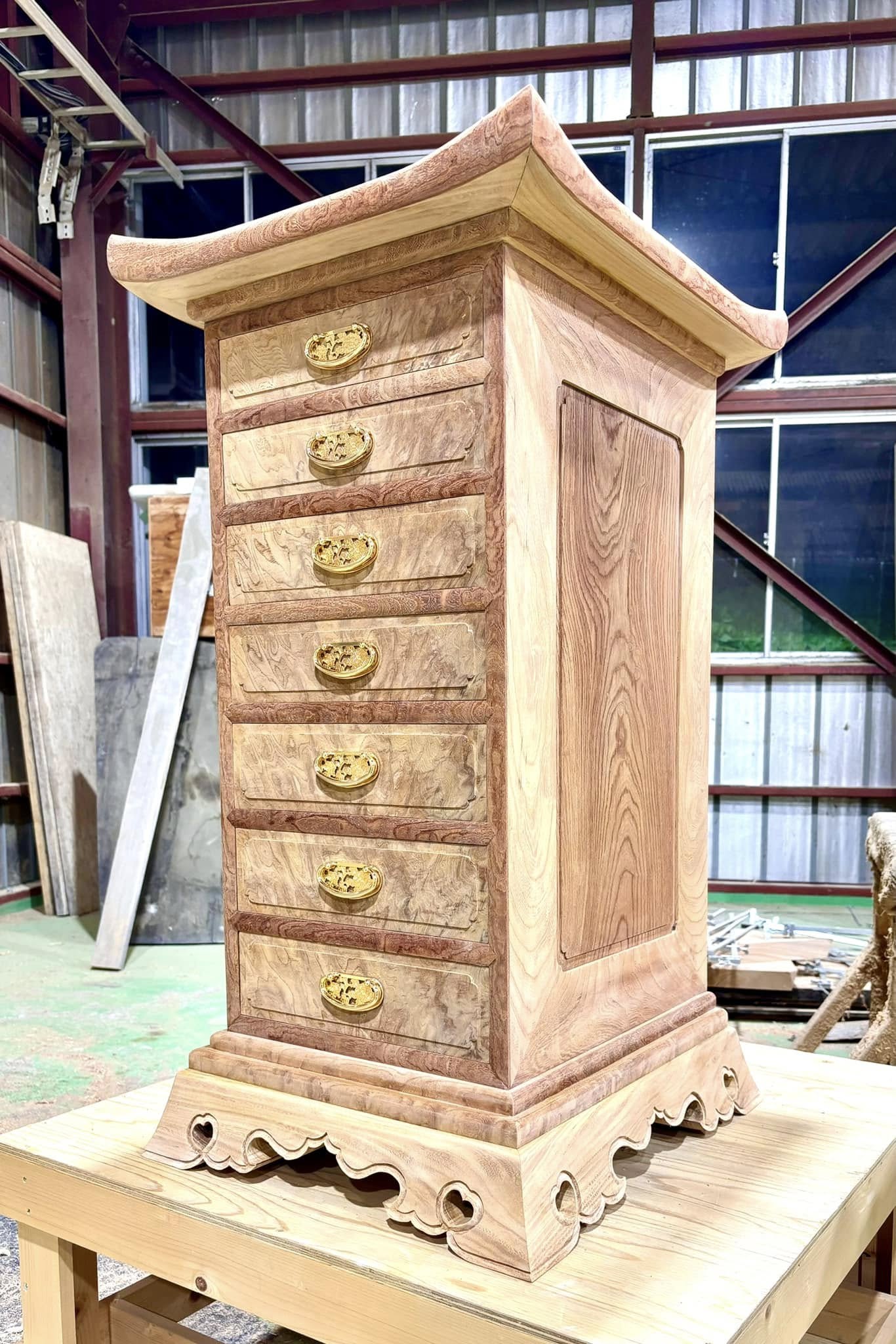
Solid Keyaki Joinery Chest
Delivery: 5 months
Refund Policy: https://japantastics.jp/policies/refund-policy
All prices include international delivery, duties, and taxes, fully arranged on your behalf.
All orders are shipped internationally via Nippon Express, with delivery fully managed from Japan to your residence and tracked throughout.
The Pinnacle of Japanese Craftsmanship, Formed Through Tradition and Material
A Singular Work of Joinery Infused with the Spirit of the Artisan
Revered as the king of Japanese hardwoods, keyaki (Japanese zelkova) has long been prized for its extraordinary strength and beauty. Crafted from carefully selected solid keyaki timber, this exceptional chest featuring seven drawers embodies the highest traditions of sashimono—the refined Japanese art of joinery furniture making. Executed entirely without nails, each component has been meticulously assembled through traditional woodworking techniques that achieve both structural integrity and the delicate refinement of fine art.
The Dynamic Beauty of Keyaki
The dramatic grain of the zelkova wood, at times bold and powerful, at others flowing with remarkable elegance, reflects the vitality of a tree shaped by nature over decades. To fully reveal this richness, the surface has been carefully polished and finished in a lacquer-inspired treatment that deepens the wood’s natural character. Depending on the light and viewing angle, the surface shifts from warm amber tones to deep reddish-brown hues, developing increasing depth and luster with age. Over time, the work matures into an object worthy of becoming a family heirloom.
An Original and Refined Silhouette
A defining feature of the work is the gently curved top, inspired by the sweeping rooflines of traditional Japanese temple and shrine architecture, paired with the graceful open-carved contours of the legs.
-
Top Surface: The subtle upward curvature introduces a quiet tension and architectural dignity to the surrounding space.
-
Leg Structure: Through the incorporation of openwork carving techniques, the substantial weight of the form is balanced with an unexpected sense of lightness and elegance.
Details That Enrich Everyday Life
The decorative metal fittings adorning the drawers provide a vivid golden contrast against the richly toned wood surface. Their intricate detailing evokes traditional motifs such as phoenixes and scrolling arabesques, lending the work an added sense of refinement and ornamentation.
Thanks to the precision of traditional sashimono craftsmanship, the drawers open with remarkable smoothness, offering a tactile experience that conveys the warmth and sensitivity of the artisan’s hand with every use.
A Legacy Beyond Generations
More than a storage cabinet, this work possesses the power to transform the atmosphere of a space through its sheer presence. Equally suited to traditional Japanese interiors and contemporary environments, it stands as both functional object and architectural statement.
Created as a distinguished place for treasured objects, letters, and the meaningful artifacts of daily life, it is conceived not merely for one generation, but as a lifelong companion to be handed down across time.
An enduring expression of the finest traditions of Japanese craftsmanship.
Dimensions
Width: 475 mm
Depth: 560 mm
Height: 915 mm
Weight: 20 kg
Materials – Sourced in Japa
Solid Zelkova Wood
Solid Paulownia Wood
Finish
Wiped Urushi Lacquer Finish
Artist’s Profile
Master Artisan of Contemporary Japanese Furniture
Third-Generation Head of Sato Mokko
Born into the distinguished Sato Mokko workshop—founded in 1934 in Tsuru City, Yamanashi Prefecture—Keiichiro Sato is the third-generation heir to a lineage long revered for exceptional craftsmanship. Once known locally by the saying, “For bridal furnishings, go to Sato Mokko,” the atelier built its reputation through refined heirloom furniture and traditional architectural woodwork.
From an early age, Sato absorbed the discipline of master craftsmanship under the guidance of his grandfather, Zenjuro. He inherited techniques rooted in shrine and temple architecture, including intricate kumiko latticework, complex structural joinery, and precision cabinetry—foundations that would later define his artistic language.
At seventeen, he encountered a defining turning point when the family business faced severe financial hardship under the second generation. Taking on responsibility at a young age, Sato sustained traditional commissions while simultaneously pursuing an independent vision—one that would unite heritage craftsmanship with contemporary form.
Guided by the belief that true craftsmanship is timeless, Sato established his signature genre of Creative Japanese Furniture: works that combine rare solid Japanese zelkova, authentic urushi lacquer, gold leaf, and centuries-old techniques with a bold contemporary sensibility. His creations transcend conventional furniture, emerging instead as collectible works of functional art that embody the Japanese ideal of beauty through utility.
In recent years, his work has received recognition both in Japan and internationally. Exhibitions include the Paris International Salon (recommended invitation), the Cartago Museum in Costa Rica (presented at the request of Japan’s Ministry of Foreign Affairs), exhibitions in Dalian, China, and selection for the Japan–France Contemporary Art World Exhibition for his work TAMATEBAKO. His works have also been presented at The National Art Center, Tokyo, alongside numerous museum exhibitions, solo shows, and publications.
In 2023, a devastating fire destroyed his factory, showroom, tools, and materials accumulated over decades. Yet within only seven months, Sato resumed production—an act that reflects the resilience and uncompromising spirit that define master artisanship.
Today, Keiichiro Sato continues to shape wood in pursuit of works intended to endure not merely for a lifetime, but for generations—objects of substance, beauty, and permanence, created with a view toward the centuries ahead.