Japantastics, Inc.
Sangenshi Kikuoka: Chinton - A Playable Mini Shamisen
Sangenshi Kikuoka: Chinton - A Playable Mini Shamisen
1 in stock
Couldn't load pickup availability
Chinton: A Playable Mini Shamisen
Delivery: 6-7 weeks
Refund Policy: https://japantastics.jp/policies/refund-policy
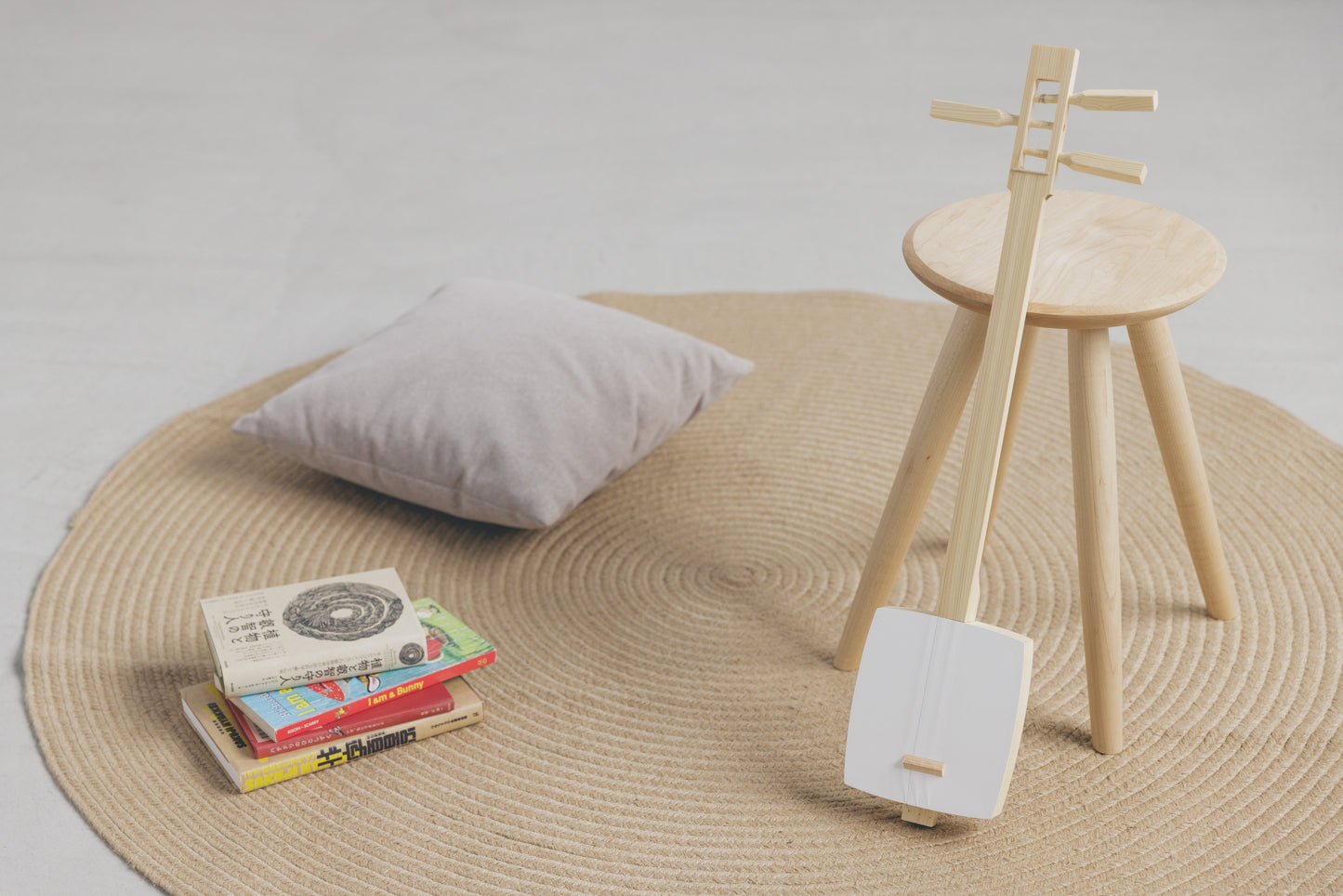
Chinton is a compact shamisen created by Sangenshi Kikuoka, designed to make the enjoyment of the shamisen a natural part of everyday life.
Measuring approximately two-thirds the size of a traditional shamisen, it has an irresistibly charming presence that invites you to pick it up and play.
Despite its compact size, Chinton is crafted with authentic quality. Each instrument is carefully handmade by a certified traditional craftsman using time-honored techniques.
The playing method is the same as that of a full-sized shamisen, making Chinton an ideal first step for anyone who dreams of playing the traditional instrument one day.
This standard model features a clean white acoustic membrane that beautifully complements the natural grain of Japanese hinoki cypress. Its simple and elegant appearance allows it to blend seamlessly into any interior.
Specifications
- Dimensions: 710 mm (H) × 200 mm (W) × 36 mm (D)
- Neck: Japanese Hinoki Cypress (Hinoki)
- Acoustic Membrane: Yupo® synthetic paper (tear-resistant and highly durable)
- Included Accessories:
- Mount Fuji-shaped bachi (plectrum)
- Dedicated display stand
Shamisen and Chinton
One of the comments we hear most often from people who play Chinton for the first time is:
"It sounds much better than I expected."
And there is a good reason for that. Chinton faithfully inherits the techniques and playing style of the traditional shamisen.
It has the same three strings, uses the same tuning system, and follows the same principle of changing pitch by pressing the finger positions (tsubo) with the left hand. You can even play directly from standard shamisen sheet music.
At the same time, Chinton has been thoughtfully adapted for modern lifestyles, making it easy to enjoy the sound of the shamisen in everyday life.
The Sound of the Shamisen, Reimagined for Modern Living
Traditional shamisen necks are made from dense hardwoods such as kouki (red sandalwood), shitan (rosewood), or karin (Chinese quince). Chinton, by contrast, uses Japanese hinoki cypress.
As a result, while the shamisen produces a sharp, powerful resonance, Chinton offers a softer, warmer, and more rounded tone.
The body material is also different. Traditional shamisen are covered with cat skin or dog skin (though synthetic alternatives have become more common in recent years), while Chinton uses Yupo®, a highly durable synthetic paper.
Although it does not reproduce the delicate nuances of natural skin, it offers practical advantages: it will not tear and is unaffected by humidity.
Anyone who owns a shamisen may be familiar with worrying about the condition of the skin during Japan's rainy season or accidentally damaging it. With Chinton, you can simply leave it in your living room without concern.
Played with a Pick
A traditional shamisen is played with a large wooden plectrum called a bachi, shaped somewhat like a ginkgo leaf. The player strikes the strings with a wrist motion, creating the powerful and distinctive sound for which the shamisen is known.
However, mastering the correct angle, force, and wrist movement requires time and practice.
Chinton is played using the included Mount Fuji-shaped pick.
Used much like a guitar pick, it allows beginners to start playing intuitively. While it does not produce the same powerful attack as a traditional bachi, it makes the instrument much more approachable—something you can pick up and play whenever the mood strikes.
The fundamental sensation of pressing the strings and producing notes, however, remains very much the same as with a shamisen.
Easy to Enjoy at Home
A standard shamisen measures approximately 100 cm in length, while Chinton is about 70 cm long.
Although the difference may seem small on paper, it feels substantial in practice. Chinton is light enough to hold comfortably with one hand, allowing you to take it off a shelf and start playing immediately.
Volume is another important difference. A shamisen is designed to project rich, powerful sound suitable for practice halls and stage performances, but that can require consideration in apartment living.
Chinton produces a gentler volume that is unlikely to disturb people in adjacent rooms. It is quiet enough to enjoy even in the evening.
An Instrument Connected to the Shamisen
The number of strings (three), the tuning systems (Honchoshi, Niagari, and Sansagari), and the basic left-hand fingering techniques are all shared with the shamisen.
What you learn on Chinton can be carried directly over to a traditional shamisen. This is why experienced shamisen players often feel immediately comfortable when they pick up a Chinton.
Chinton is not a completely different instrument—it is an instrument that remains closely connected to the shamisen tradition.
Which One Is Right for You?
If your goal is to study the shamisen seriously or eventually perform on stage, we recommend starting with a traditional shamisen. There are techniques, including the use of the bachi, that can only be fully learned on the instrument itself.
On the other hand, if you would like to enjoy traditional Japanese sounds in daily life, experience a stringed instrument for the first time, or keep an instrument readily available at home, Chinton may be the perfect choice.
Some players begin their musical journey with Chinton and later move on to a full-sized shamisen.
We created Chinton with the hope of bringing the beauty, sound, and playing experience of the shamisen into modern homes and lifestyles.
We hope Chinton will serve as a welcoming gateway to the world of the shamisen and allow you to enjoy the charm of this traditional Japanese instrument in your everyday life.
Share